Posts

Showing posts with the label skeptics

Objections 101: Can God Make A Rock So Big He Can't Lift It?

Image
Welcome to the first in the new series, Objections 101, where we will take a look at some misconceptions and objections commonly brought up by the skeptics. Today, we will take a look at the question, "Can God make a rock so big He can't lift it?" -------- Q . Can God Make A Rock So Big He Can't Lift It? A . This is a common question that that skeptics bring up in order to suppress the idea that God may actually exist as the Theist claims and believes. It questions God's omnipotence by claiming that if He were all-powerful He could do anything -- even make a rock so large He couldn't lift it. However, it is important to realize that there are some things that God cannot do : He can’t do anything contrary to His nature. Greg Koukl from Stand To Reason explains it very simply in the following video: D. James Kennedy summed it up well in his book S keptics Answered  when he stated, "To me, this is like asking, 'Did you drive to wor...
Resurrection Series Part 10: Conclusion

Image
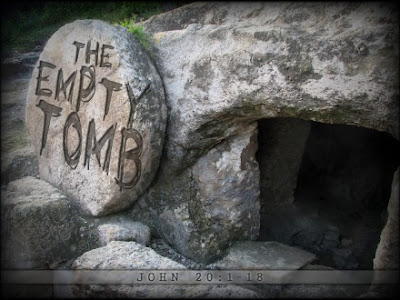
Welcome to part 10 of the Resurrection series -- our final post based on the book The Case for the Resurrection of Jesus . You can find all proceding parts here . In this post, we will continue with a few more objections to the Resurrection before reaching the conclusion. I hope you have enjoyed this series! Christ is Risen: He is risen indeed! Though the Resurrection is not in dispute, many will try to downplay the witness of the disciples by comparing it to other religions. For example, Joseph Smith and eleven witnesses all claimed that they experienced supernatural appearances, so what is the difference between the supernatural experiences of Jesus and the twelve disciples? A close examination of this point will reveal that while Jesus’ disciples suffered for and died for their beliefs, six of the eleven witnesses to Moroni’s gold plates left the Mormon Church! But even if these witnesses had seen the golden plates, this does not mean that there is anything valid contained w...

Part 9: The Resurrection of Jesus and God's existence

Image
Welcome to part nine of the Resurrection series. Please see all preceding parts before continuing. Today, we will be talking about the importance of the Resurrection in conjunction with God's existence. Another issue that must be answered by the skeptics is Jesus’ claims about Himself. Jesus claimed to be “Son of Man” first. Was this really true of Jesus or was the title invented, as many skeptics would have us believe? In order to answer this question, we must first consider that the term is referred to in the New Testament only three times outside of the Gospels, and Christians writings within 120 years after Jesus only mention it three times. This debunks the claim that the church made up the title as “Jesus’ favorite self-description” (page 241) – the church did not refer to Jesus in this way! Secondly, all of the four Gospels use this title in reference to Jesus. Thirdly, this title actually places more emphasis on Jesus’ humanity; this in itself seems to disprove the ...

Resurrection Series Part 6: More Objections

Welcome to part six of the resurrection series based on the book The Case for the Resurrection of Jesus. Please see all preceding parts before reading this post. Today, we will continue to talk about a few more objections to the Resurrection that are often brought up by the skeptics. The next method of the critic, then, is to claim that there are discrepancies in the Resurrection accounts, thereby calling into question the Bible’s inerrancy. But this approach does not call into question the Gospel writers’ “general trustworthiness when recording historical events” (page 122). Additionally, when a historian looks at an event, he does not immediately conclude that because there are discrepancies in the testimonies that the event did not occur. No one rejects other works of antiquity where discrepancies are present; instead, the data is examined more closely. In fact, the differences in the Gospels only points to more than one witness, giving the historian further proof of it...

Resurrection Series- Part 5: Psychological Problems?

Image
Welcome to part five of our resurrection series. Please see all preceding parts before reading this one to get a better understanding of what is being discussed. Today, we will talk about the psychological objection to the Resurrection -- the idea that the disciples had some sort of disorder which caused them to believe that Jesus rose from the dead. Some like to claim that the disciples experienced some psychological event, and therefore they claim that they saw the risen Christ. Let’s define some of these terms. Illusions are a distorted perception of something, hallucinations are “false perception[s] of something that is not there” (page 105), and delusions are false beliefs when there is evidence to the contrary. For the sake of argument, lets look at each of these as they would apply to the disciples, using an illustration. Suppose a widow’s husband has just died. A delusion would be for her to deny that her husband has just died despite the fact that he did – the...

Resurrection Series- Part 4: Opposing Theories

Image
Welcome to part four of the Resurrection series. Please see part 1 , part 2 , and part 3 of the series for a better understanding of what is being discussed. In this post, we will look at four opposing theories to the Resurrection.  Despite the evidence for the Resurrection, there are numerous opposing theories. The first of these is the theory that the disciples’ claims to the Resurrection are all legendary; legends crept in over time and distorted the truth. However, the Resurrection story originated from the disciples. If skeptics wish to accuse them of lying or hallucinating, they may since the disciples themselves made the claim. But there is no evidence for the assumption that legend crept in after the disciples. But even if we suppose that legend did creep in to the Resurrection account, it is important to realize that Paul believed in Jesus separate from the disciples’ testimonies (as a matter of fact, he didn’t go up to Jerusalem for three years after his conversion, d...